
How to Fix Duplicate Content: Diagnose, Consolidate, and Measure
Fix duplicate content by finding the extra URLs in Search Console and crawls, choosing merge vs canonical vs keeping a URL out of the index, tightening internal links, and checking clicks after.

To fix duplicate content, pick one keeper URL per search intent, remove or demote the copies with a merge, a canonical, or noindex, then point internal links and your sitemap at the winner and measure in Search Console after recrawl. Duplicates come from parameters, www mismatches, thin republished pages, and syndication. The job is not to panic about a penalty. It is to stop splitting crawl budget, links, and clicks across URLs that should represent one answer.
What counts as duplicate content
Duplicate content means more than one indexable URL that search engines could treat as the same document or the same answer. Exact copies are the easy case: two URLs return the same HTML. Near duplicates are harder: titles and intros differ slightly, but the body repeats or the page adds no distinct intent.
Duplicate URLs are not the same problem as keyword cannibalization, where several distinct pages compete for one query. Cannibalization can happen without byte-identical bodies. Duplicates often create cannibalization, but you fix duplicates with URL hygiene first, then revisit intent overlap if multiple keepers still share a query.
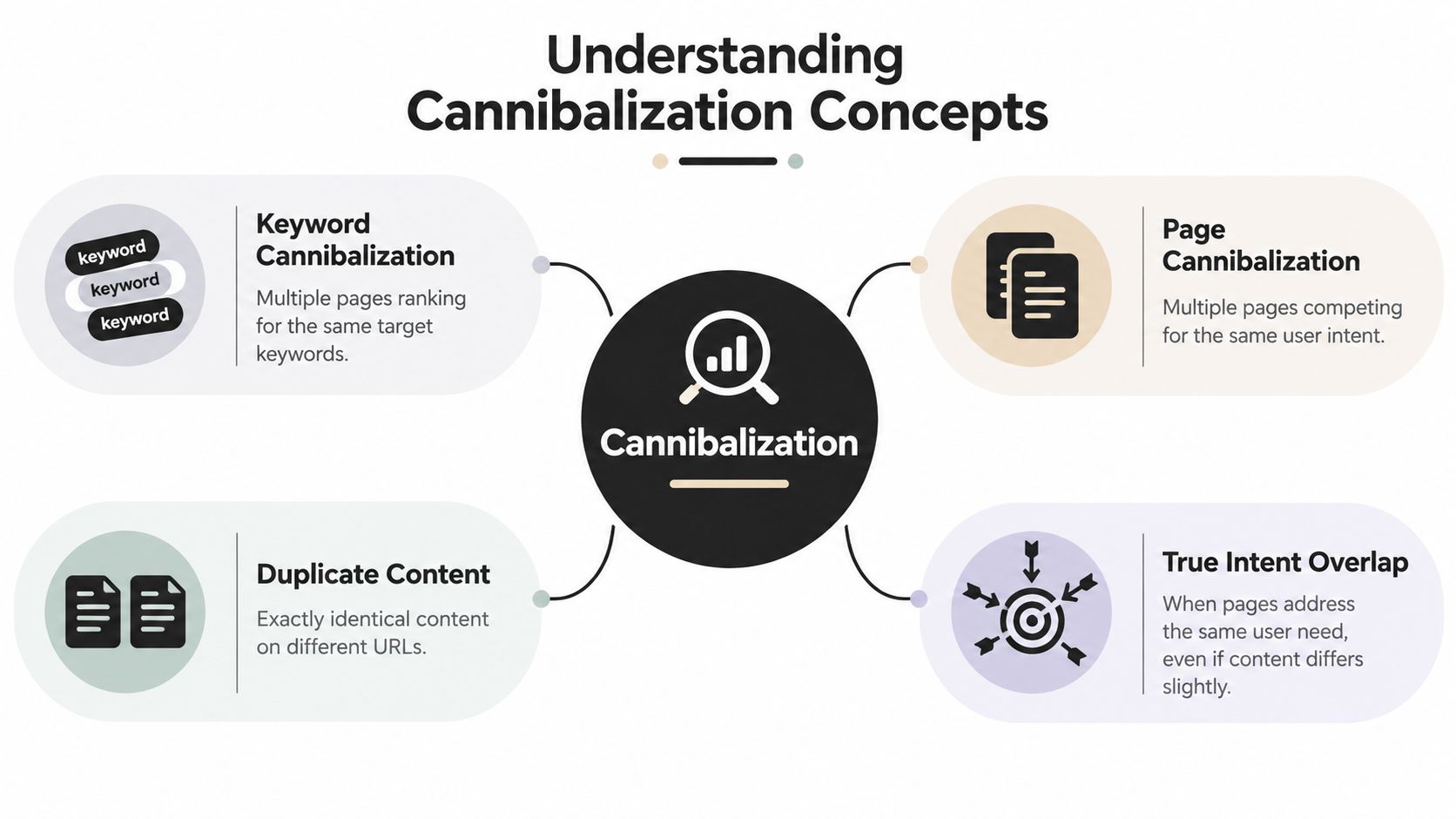
Common causes
Most duplicate clusters trace back to a short list of publishing and infrastructure habits.
Tracking and facet parameters
Analytics and ad platforms append query strings. Faceted navigation generates combinations such as sort, color, and page size. Each variant can become a crawlable URL if links and sitemaps expose them. Google may index many variants unless you consolidate signals on one canonical.
WWW, HTTP, and trailing slash
Hosting stacks often answer both www and non-www, HTTP and HTTPS, with and without a trailing slash. Without permanent redirects and consistent internal links, crawlers see four hosts where one site should exist.
Thin copies and template bloat
Tag pages, paginated archives, and location stubs reuse the same boilerplate with a swapped keyword. Partner pages reuse product copy. Print-friendly views duplicate articles. None of these need to rank if a stronger keeper already answers the query.
Syndication and scraped reposts
Press releases, marketplace listings, and guest posts reappear on your domain and others. When you must keep syndicated HTML live, canonicals and clear attribution reduce self-competition. When you control both sides, pick one indexed keeper and link out from the copy.
| Cause | What crawlers see | First fix to try |
|---|---|---|
| Parameter URLs | Many URLs, one product or article | Canonical to the clean URL; strip params from internal links |
| Host or protocol mismatch | www vs non-www, HTTP vs HTTPS | 301 to one host; update sitemap and nav |
| Thin archive pages | Near-identical titles and bodies | Merge into a hub or noindex low-value lists |
| Syndication | Same article on two paths | Canonical to the original; or noindex the syndicated copy |
How to diagnose duplicates
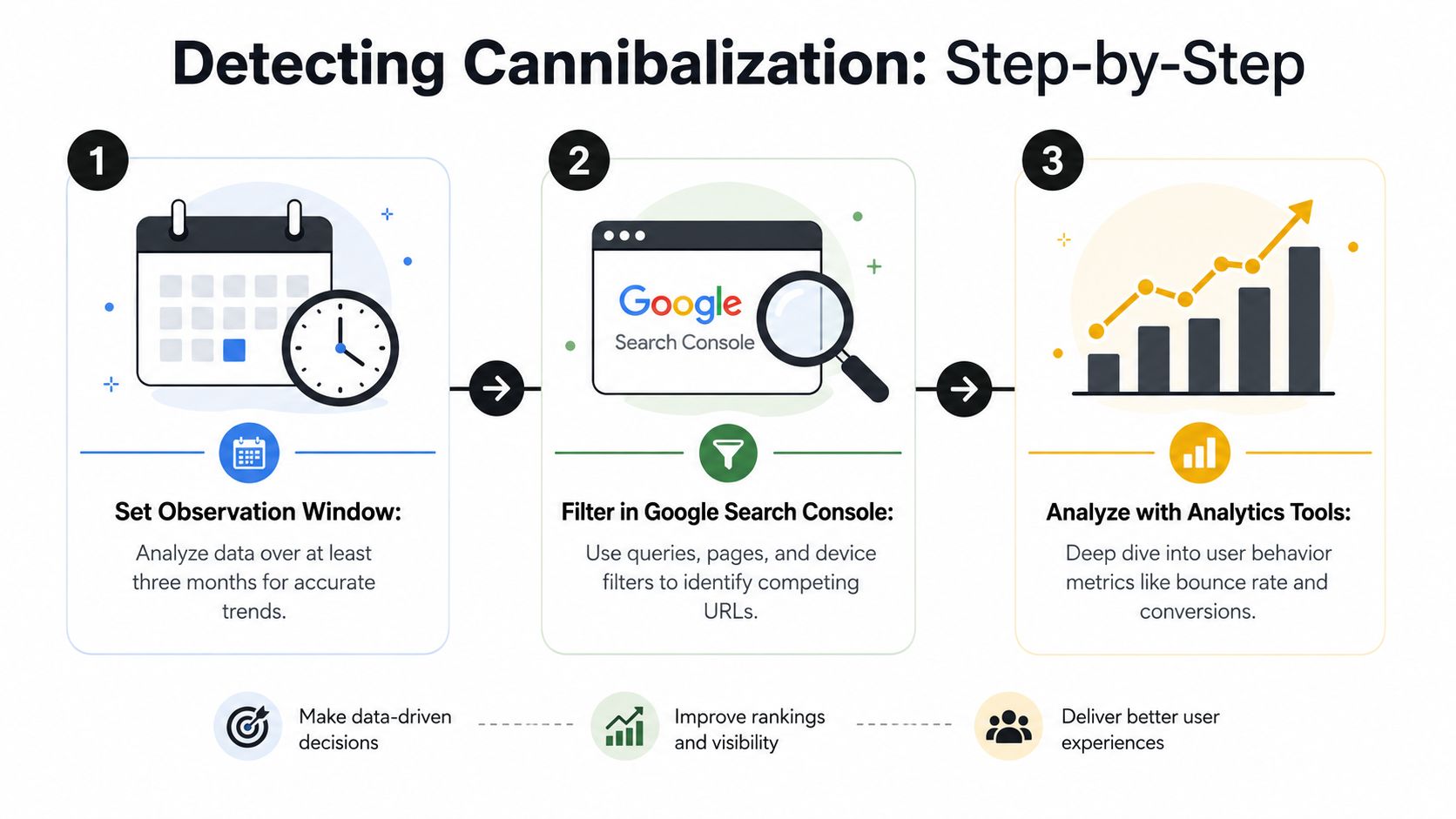
Start with evidence, not assumptions. You want a list of URL pairs or clusters, the duplication type, and which URL should win for humans and for search.
Google Search Console
In the Pages report, filter for indexing reasons that mention duplicates, such as duplicate without user-selected canonical or alternate page with proper canonical tag. Open URL Inspection for sample losers and winners. Note which URL Google selected as canonical today, because that informs whether your preferred keeper already has traction.
Export Search results with query and page when duplicates also split clicks. That export connects technical duplicates to revenue pages.
Site search and sampling
Run site:yourdomain.com searches for repeated title fragments or product names. Compare snippets: if two URLs show the same description, inspect whether the bodies overlap. Sampling is not exhaustive, but it surfaces obvious clusters quickly.
Crawl audit
Run a full crawl with a desktop crawler or the checks in Orchory free SEO tools. Sort for duplicate titles, duplicate meta descriptions, duplicate H1, and near-duplicate content hashes. Group URLs by template: faceted product grids, paginated blogs, and campaign landers often fail as a set rather than one bad page.
Practical rule: do not merge until you can name the keeper URL and explain why it wins on intent, links, and conversions.
Merge, canonical, or noindex
Choose the smallest change that makes one URL clearly preferred. Prefer merges when both copies should not exist as separate destinations. Prefer canonicals when a duplicate must stay reachable. Reserve noindex for pages that should not enter the index at all.
| Method | When to use it | What visitors experience |
|---|---|---|
| Merge with redirect | Same intent, no reason to keep both URLs | Old URLs land on the keeper; one page in nav |
| Rel=canonical | Duplicate must stay live; bodies match or nearly match | Both URLs may open; search consolidates on canonical |
| Noindex | Utility or partner page that should not rank | Page works for users; dropped from index over time |
Merges and redirects
Combine content on the keeper: move unique sections, tables, and FAQs, then publish. Return 301 redirects from every retired URL. Update XML sitemaps, navigation, breadcrumbs, and campaign links. Remove retired URLs from internal search indexes if you operate one.
Canonical tags
Add a single rel=canonical on each duplicate pointing to the absolute URL of the keeper. Canonicals fit parameterized product URLs, sorted lists, and syndicated HTML you cannot redirect. They are a weak substitute when two full articles compete on intent: if both pages read like answers, merge or retarget instead of only tagging.
Noindex
When a URL must exist but should not accumulate search signals, use noindex,follow unless you have a reason to block links. Typical candidates include internal search results, thin tag archives, and printable views once the article keeper is clear. Do not noindex a URL that still receives important external links unless you redirect those references.
Fix internal links
Technical signals fail when your own site keeps recommending the wrong URL. After you pick a keeper, treat internal links as part of the fix, not cleanup later.
- Navigation and hubs: point menus, category pages, and related modules to the keeper only.
- Contextual anchors: rewrite in-body links that still target retired duplicates. Use descriptive anchor text that matches the keeper intent.
- Parameterized links: strip tracking and facet params in templates so new duplicates do not appear faster than you fix old ones.
- Sitemaps: list canonical URLs only. Drop parameterized variants unless you deliberately index them.
For a deeper linking model when duplicates came from overlapping topics, read this internal linking strategy guide. Strong hubs make it obvious which URL owns a cluster.
Measure after you ship
Ship the keeper, redirects, canonicals, and link updates together when possible. Split deployments leave contradictory signals live.
- Baseline: export clicks, impressions, and average position for the keeper and each retired URL for the prior 28 to 90 days.
- Coverage: watch URL Inspection on retired URLs until Google reports redirect or canonical handling you expect.
- Cluster performance: compare combined clicks on the query group to the pre-change total, not only the keeper in isolation.
- Crawl stats: confirm crawl requests shift toward keepers and away from retired paths.
Allow time for recrawl. Judging a merge after forty-eight hours usually creates false negatives. Schedule a follow-up review at thirty days and again at ninety for high-value clusters.
Stop the next duplicate
Fixing today's pile matters less if next week's release recreates it. Add lightweight guards:
- One primary URL per brief: before a new page ships, search your sitemap and CMS for the same intent.
- Template rules: default faceted and campaign URLs to noindex or canonical in code, not as a manual ticket each time.
- Host policy: enforce HTTPS and a single hostname in redirects at the edge.
- Quarterly duplicate crawl: re-export duplicate title and body reports after large migrations.
Orchory helps on the content side of the same problem: it ranks page opportunities so your team ships one cite-ready answer per query instead of a third near copy. The auto SEO tool workflow describes how research turns into pages you review before anything goes live. When you want hands-on help choosing the first keeper page, send your site and the team sets up a first page with you on a call before you pay.
The questions below restate the decisions this guide covers. They are not a substitute for naming keepers from your own crawl and Search Console exports.
