Featured Snippet Optimization: A Developer's Playbook for the AI Overview Era
Featured snippet optimization is a formatting and deployment problem. Ship it like product work: find opportunities, match SERP format, PR it, measure.
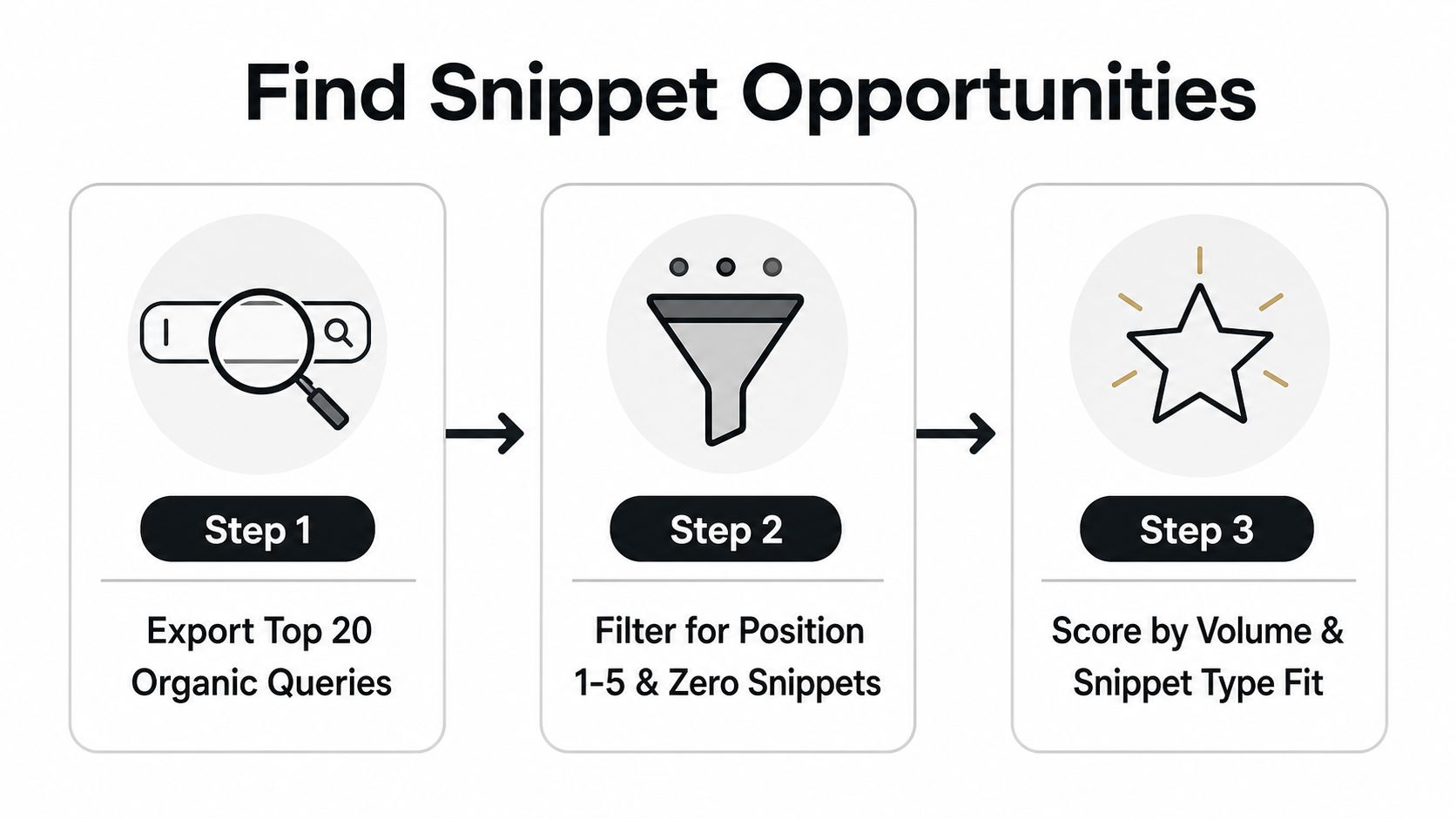
The usual advice says to "write better answers" and the snippet will follow. That's incomplete. Featured snippet optimization is mostly a formatting and deployment problem, which means a bootstrapped SaaS team can ship it the same way it ships product work: change the page structure, push a PR, then check Search Console after the crawl lands.
For teams using coding agents, the useful mental model is simple. Treat snippet work as a fast iteration loop, not a content campaign. Find queries where you already show up, match the SERP's snippet shape, ship a cleaner answer block, then measure whether Google swaps in your page.
Why Featured Snippets Still Matter in the AI Overview Era
A lot of teams treat featured snippets as obsolete because AI Overviews now sit above some results pages. That conclusion misses how Google still separates featured snippets as a distinct special result type, while newer coverage distinguishes single-source featured snippets from multi-source AI Overviews (Google Search documentation).
The business case is narrower, and better
Featured snippets still matter on queries where the searcher is close to a decision and the page can give a clean, extractable answer. That includes definition queries, comparison queries, and how-to pages where the reader wants the shortest path to an answer. The format work is practical, not decorative. Search Engine Journal's guidance on snippet behavior points to concise answers, clear headings, and matching page format to the snippet type, work a developer can ship without rebuilding the content program (Search Engine Journal).
The older "position zero" framing is less useful than the shipping model. The page either gives Google a passage it can lift cleanly, or it doesn't. For B2B SaaS pages that already rank well enough to be considered, that makes snippet work worth the pull request, especially when the alternative is sending a high-intent query to a competitor with a cleaner answer block.
Practical rule: If the query is informational but tied to buying, implementation, or product comparison, snippet work is still worth a look. If the page can't answer in a compact extractable block, spend the time elsewhere.
Snippet work is an iteration loop, not a publishing event
Moz's analysis of 1.4 million featured snippets found that the fastest wins often came from fixing a format mismatch between the page and the snippet already shown in search results (Moz). That is the operating model. You are not trying to outwrite every competitor from scratch. You are aligning the answer block to the format Google already prefers.
Moz also says snippet gains can show up in as little as 30 minutes, though it usually takes a few days, and if more than one week passes, the workflow should be repeated. That timing matters because it makes PR-based snippet work practical. You can ship, request indexing, watch the result, then iterate again without turning the task into a month-long editorial project.
For teams using coding agents, this is the right unit of work. Research the query, match the answer shape, land the change in a PR, then measure whether the snippet moved. That workflow fits the way small SaaS teams ship search wins, one page at a time, without pretending SEO is a separate department.
Finding Targetable Snippet Opportunities in Your Existing Rankings
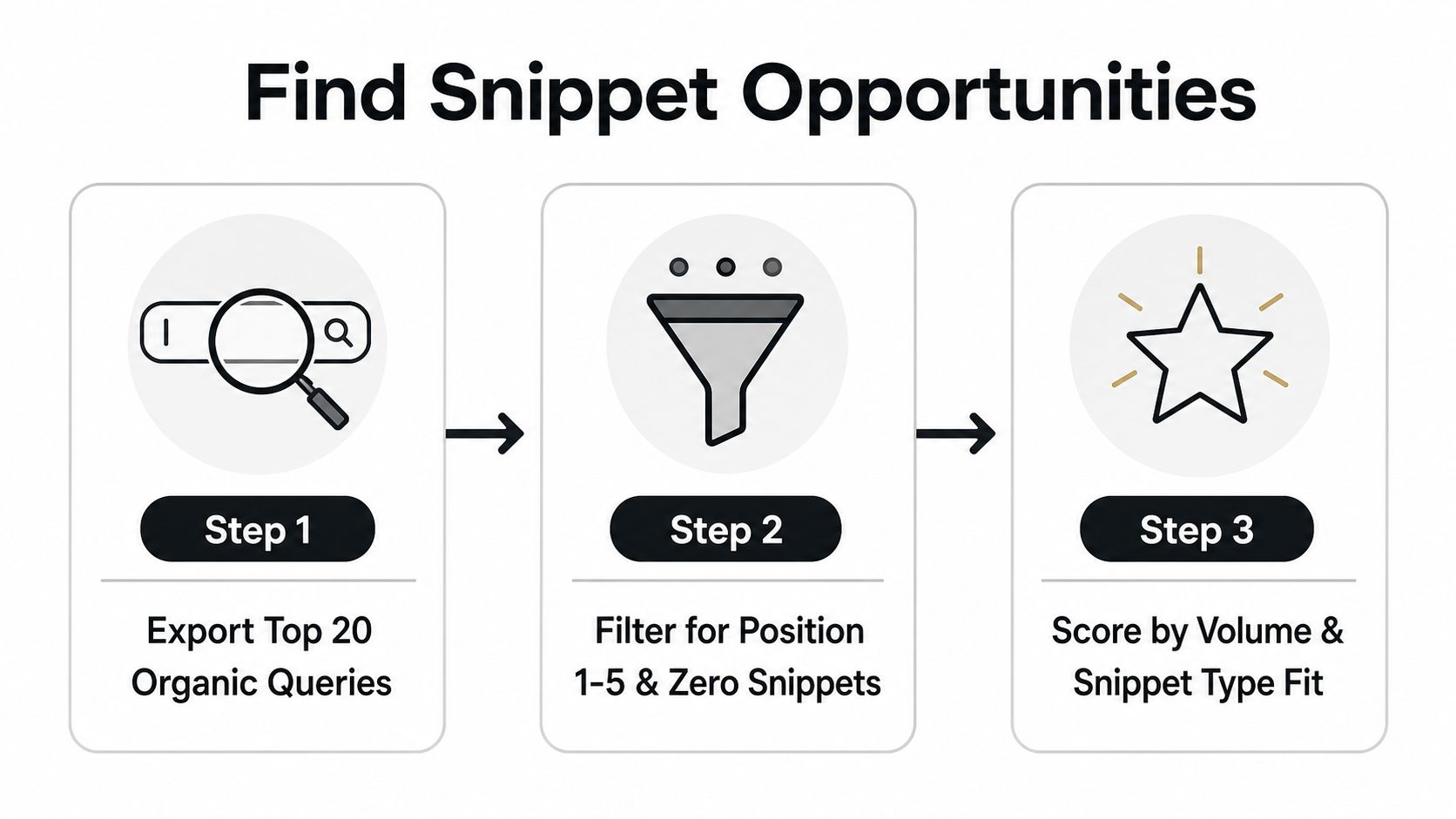
Start with queries you already rank for. The best opportunities usually sit in the top 5 to top 10, because you've already earned enough relevance for Google to consider you, but you haven't yet won the extractable answer box. A practical workflow from Proven ROI says to target existing rankings first, match the current snippet format, and then request reindexing in Search Console (Proven ROI).
Pull the right query set first
Export your top organic queries from Google Search Console, then sort by impressions and current position. Filter for pages sitting in the top 10, especially those that already get clicks but don't own the snippet. If your team uses a research workflow tool, the Orchory AI Keyword Research Tool can help surface clusters and opportunity scores before you decide which pages deserve engineering time.
A good filter set is boring but effective:
- Position range: top 5 to top 10, because you want existing ranking signal.
- Query shape: question words, comparison terms, and how-to phrasing.
- Page type: glossary, comparison, use case, or support-style content.
- Business relevance: terms tied to product evaluation or implementation, not vanity traffic.
Inspect the current snippet, not just the keyword
Open the SERP in an incognito window and identify the snippet format already shown. Moz's research points to format mismatch as the fastest path to a win, and that's the detail teams often skip (Moz). If Google is showing a paragraph, your page shouldn't force a list. If it shows a list, don't bury the answer in a long narrative. If it shows a table, use a real table, not an image.
Search Engine Journal also notes that snippet opportunities tend to be low-volume but high-intent, which is why they're useful for B2B SaaS pages that answer a narrow question well (Search Engine Journal). That makes prioritization easier. You're not chasing the biggest query, you're chasing the one where a cleaner answer can influence evaluation.
The fastest win is usually not a new article. It's a better answer block on a page Google already trusts.
Designing Snippet-First Content Structure and HTML Patterns
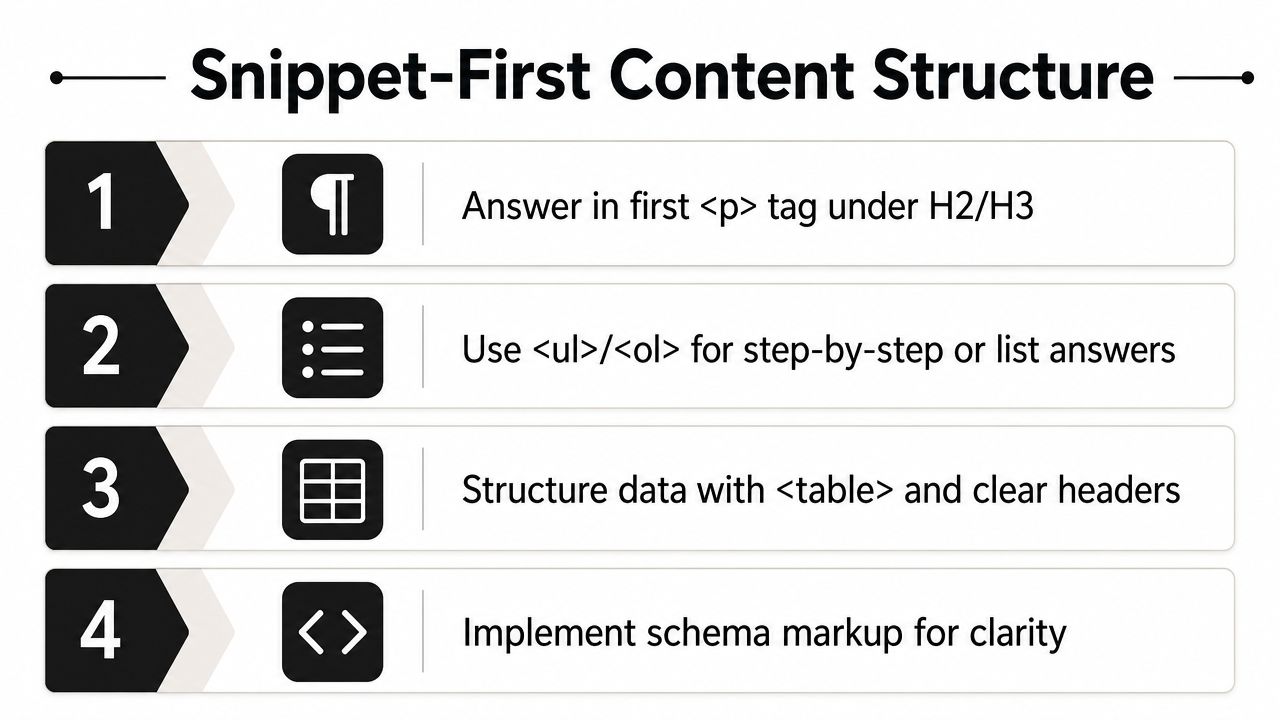
The simplest way to make a page snippet-friendly is to stop thinking in "blog format" and start thinking in extractable units. Google needs a passage it can lift cleanly, which means the answer should be near the top, wrapped in plain HTML, and separated from distractions. Search Engine Land's guidance aligns with that pattern: clean markup and a direct answer near the top tend to make extraction easier (Search Engine Land).
Use the question as the heading, then answer it immediately
The target query should appear as an H2 or H3, then the first paragraph should answer it directly in about 40 to 60 words. That range shows up repeatedly in snippet guidance, including Frase's recommendation to put a concise answer immediately under the heading (Frase). The goal is not to sound clever. The goal is to be extractable.
A structure like this is easy for a coding agent to implement:
<h2>What is featured snippet optimization?</h2>
<p><strong>Featured snippet optimization</strong> is the practice of structuring a page so Google can lift a direct answer, list, or table from it. The page usually already ranks on page one, and the main work is matching the snippet format, placing the answer near the top, and keeping the markup simple.</p>
<p>Supporting detail goes here, after the core answer.</p>
Match the snippet type instead of forcing your own
If the SERP shows a list, use list markup. If it shows a table, use an actual table. If it shows a paragraph, keep the answer tight and plain. Search Engine Journal and Backlinko both describe the common snippet types as paragraphs, lists, tables, and videos, which is enough to guide implementation without overthinking it (Search Engine Journal, Backlinko).
Use patterns like these:
<h2>How do you reduce onboarding friction?</h2>
<ol>
  <li>Cut required fields.</li>
  <li>Delay optional setup.</li>
  <li>Show the first success path fast.</li>
</ol>
<h2>What are the pricing tiers?</h2>
<table>
  <thead>
    <tr>
      <th>Plan</th>
      <th>Best for</th>
    </tr>
  </thead>
  <tbody>
    <tr>
      <td>Starter</td>
      <td>Small teams</td>
    </tr>
  </tbody>
</table>
Avoid banners, widgets, and design clutter around the answer block. A plain paragraph, clean list, or real table is easier to extract than a decorated card with tabs, accordions, and nested components. Automateed's guidance is blunt on this point: mirror the existing SERP structure instead of forcing a different one (Automateed).
Keep the page readable to humans, but build it for machines first
The article can still be useful to humans after the snippet block. Put caveats, examples, and deeper context below the direct answer, not before it. Backlinko's guidance also emphasizes that a page usually needs first-page visibility before it has a real shot at a snippet, so structure alone isn't enough, but it's the part you control fastest (Backlinko).
If the answer isn't the first clean thing in the section, it's probably too buried for snippet extraction.
Implementing Schema and Technical Signals for Snippet Eligibility
Schema does not force a snippet into existence, but it helps Google understand what the page is and how the content is organized. That matters when you ship pages through code, because the markup can support the page intent without turning the implementation into a schema project. Keep it minimal and tied to the content the page already presents.
For snippet-oriented pages, FAQPage, HowTo, and Article are the practical schema types to consider. Use them only when they match the page structure. If the page is a how-to guide, HowTo fits. If it is a Q&A page, FAQPage fits. If it is a standard article with a direct answer block, Article is enough.
Keep the technical layer boring
Clean DOM structure matters because Google has to parse the page before it can extract anything useful. Avoid overly nested components around the answer, limit unnecessary client-side obfuscation, and make sure the text is present in the HTML the crawler receives. Search Engine Land's guidance on featured snippets points to simple HTML elements as the easiest path for extraction (Search Engine Land).
A practical implementation checklist looks like this:
- Use semantic headings: Put the target question in an H2 or H3.
- Render text plainly: Do not hide the answer inside tabs or accordion states that break parsing.
- Prefer native elements: Use
<p>,<ul>,<ol>, and<table>before custom components. - Keep the answer visible: The first answer block should appear without extra interaction.
Orchory's AI Brand Visibility product operates in the same broader space of search visibility planning, but the snippet-specific work still comes down to page structure, page intent, and crawlable text.
Ship the minimum technical change that improves extraction
The biggest mistake is over-engineering schema while leaving the answer buried. A tight paragraph under the heading will usually do more than a sprawling JSON-LD layer with no visible answer block. If you need to choose, fix the structure first, then add schema that matches the content type.
The internal reference SEO for Developers is a useful framing here because snippet work belongs in the same category as other code-reviewed SEO changes. It should be versioned, reviewable, and reversible. That is how technical teams keep SEO from turning into a black box.
Deploying Snippet Optimizations via Pull Requests and Measuring Impact
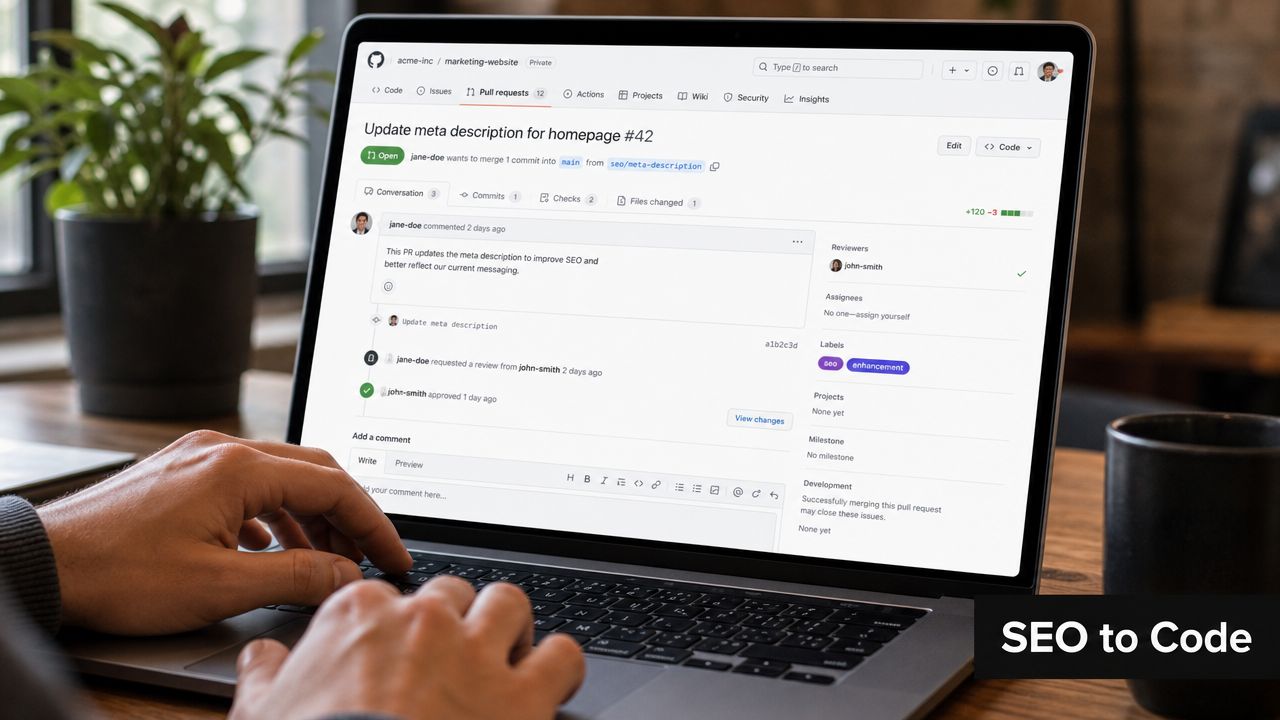
Snippet work gets easier once it's treated like a normal code change. The page already exists, the query already ranks, and the task is to improve extractability without breaking the page. That means a coding agent can draft the change, a developer can review it, and the team can ship it through a pull request instead of a CMS scramble.
Package the change like an engineering task
A useful PR prompt should name the page, the target query, the current snippet format, and the exact structural change you want. For example, tell the agent to move the direct answer under the target H2, convert a prose list into an <ol>, or replace a styled table component with semantic table markup. The output should be a diff a reviewer can inspect, not a vague content brief.
A practical prompt template looks like this:
- Target page: the URL and file path.
- Query: the exact snippet query.
- Current SERP format: paragraph, list, table, or video.
- Requested change: rewrite the answer block and match the snippet type.
- Acceptance criteria: answer appears within the first visible content block, markup is semantic, no unrelated layout changes.
That kind of prompt works well with tools like Claude Code or Cursor because the instructions are specific enough to produce a reviewable patch. It also keeps the site safe, since nothing changes until someone merges the PR.
Reindex, then measure the effect in Search Console
Moz says republishing can win a snippet in as little as 30 minutes, though it usually takes a few days, and if more than one week passes, repeat the workflow (Moz). After the PR lands, request indexing in Google Search Console and monitor the query over the next several days. If the snippet doesn't change, check the SERP format again before touching the copy a second time.
Use Search Console to compare the query's clicks, impressions, and average position before and after the change. That gives you a rough view of whether the new snippet block affected visibility, even if the result stays volatile. For controlled testing, change one page at a time so you can tell whether the result came from the content rewrite or from some unrelated site-wide shift.
Don't ship three snippet fixes at once on the same topic cluster. You'll know less, not more.
Snippet work becomes a repeatable growth loop. The page is already ranking, the answer is already visible, and the only question left is whether your version is easier for Google to extract.
Building a Repeatable Snippet Optimization Pipeline with Orchory
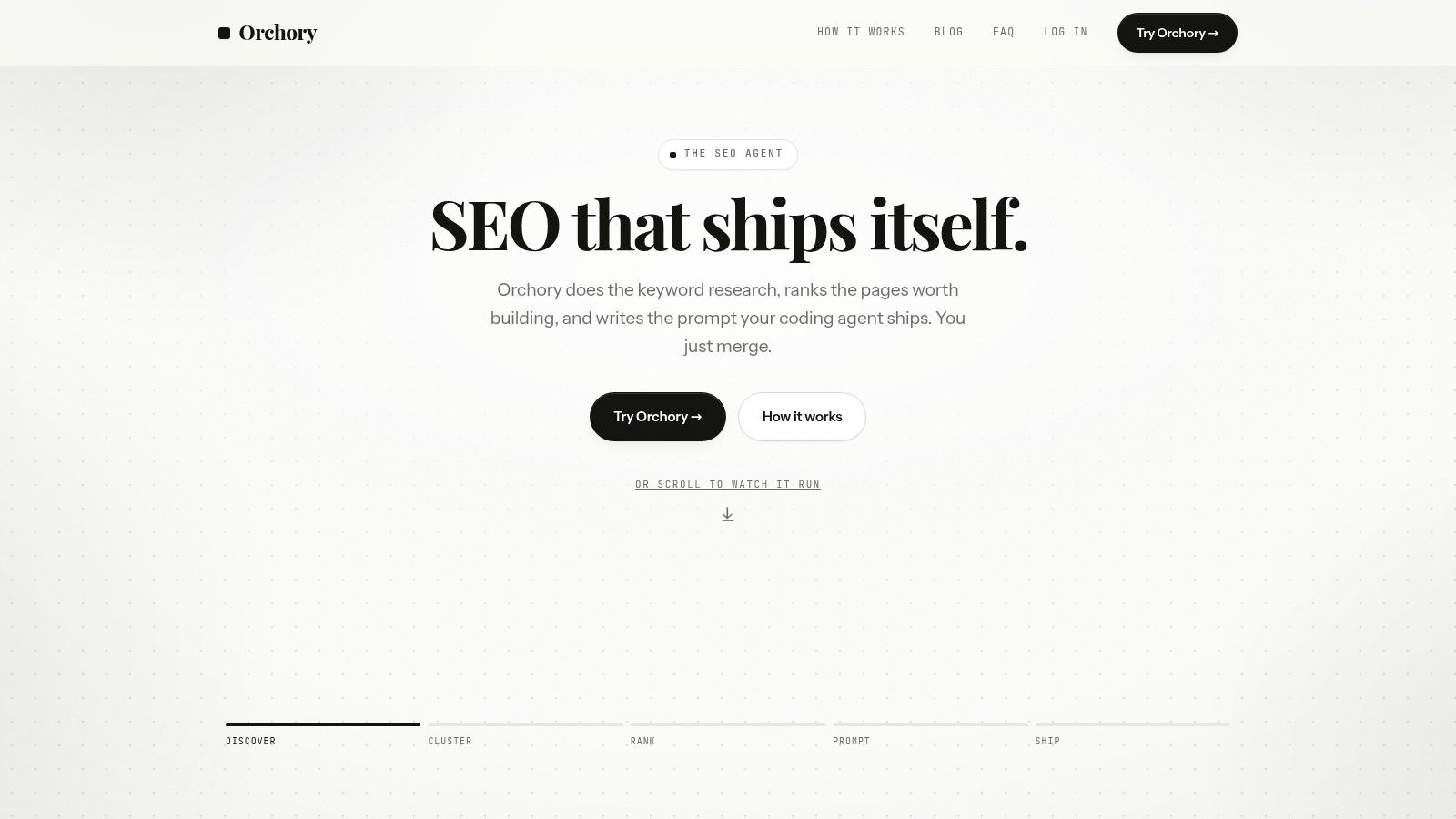
A repeatable pipeline needs three things: research, ranking, and handoff. Orchory handles the first two parts by turning keyword expansion and clustering into a ranked queue of page opportunities, then outputting prompts a coding agent can use to open PRs. That makes snippet work fit inside the same workflow you already use for development.
A weekly loop that a founder can actually run
The practical version is simple. Run research, score opportunities, pick the pages that already rank near the top, and send the best candidates to a coding agent as PR prompts. Orchory's pipeline is built around that handoff, and its queue can include page types like comparison, use case, glossary, and location so you're not guessing which content format to build next.
The operational value is that the team keeps control. Orchory doesn't need site access or CMS credentials, and nothing changes until the PR is reviewed and merged. That's a cleaner model than handing SEO to a dashboard nobody uses or to an agency that sends recommendations without a deploy path.
Keep the loop tight and the outputs reviewable
The best snippet pipeline produces artifacts, not opinions. You want a ranked opportunity list, a direct mapping from query to page type, and a prompt that tells a coding agent exactly what to change. If the output can't be turned into a pull request, it isn't ready for an engineering team.
A simple pipeline looks like this:
- Research: Expand queries and identify snippet-shaped opportunities.
- Cluster: Group terms by intent and page type.
- Score: Prioritize pages already near page one.
- Hand off: Send a PR-ready prompt to the coding agent.
- Review: Merge only after the page structure is clean and crawlable.
- Measure: Check Search Console and repeat if the snippet doesn't move.
The point isn't to automate judgment away. It's to make featured snippet optimization behave like the rest of your product workflow: visible, reviewable, and easy to rerun.
If you want a workflow that turns snippet opportunities into reviewed pull requests instead of another SEO spreadsheet, visit Orchory. It plans the research, clusters the opportunities, and hands off ready-to-run prompts so your team can ship snippet-focused changes without giving up production control.
FAQs
Are featured snippets still worth optimizing for now that AI Overviews exist?
Which pages should I target first for snippet optimization?
How do I know what format my snippet answer should take?
How long does it take to see a featured snippet change after shipping a fix?
How should snippet optimization changes be deployed?